The Best Way to Watch TV Lying Down (Without Wrecking Your Neck)
Your TV wasn't placed for someone lying flat. Here are five ways to get a comfortable view.
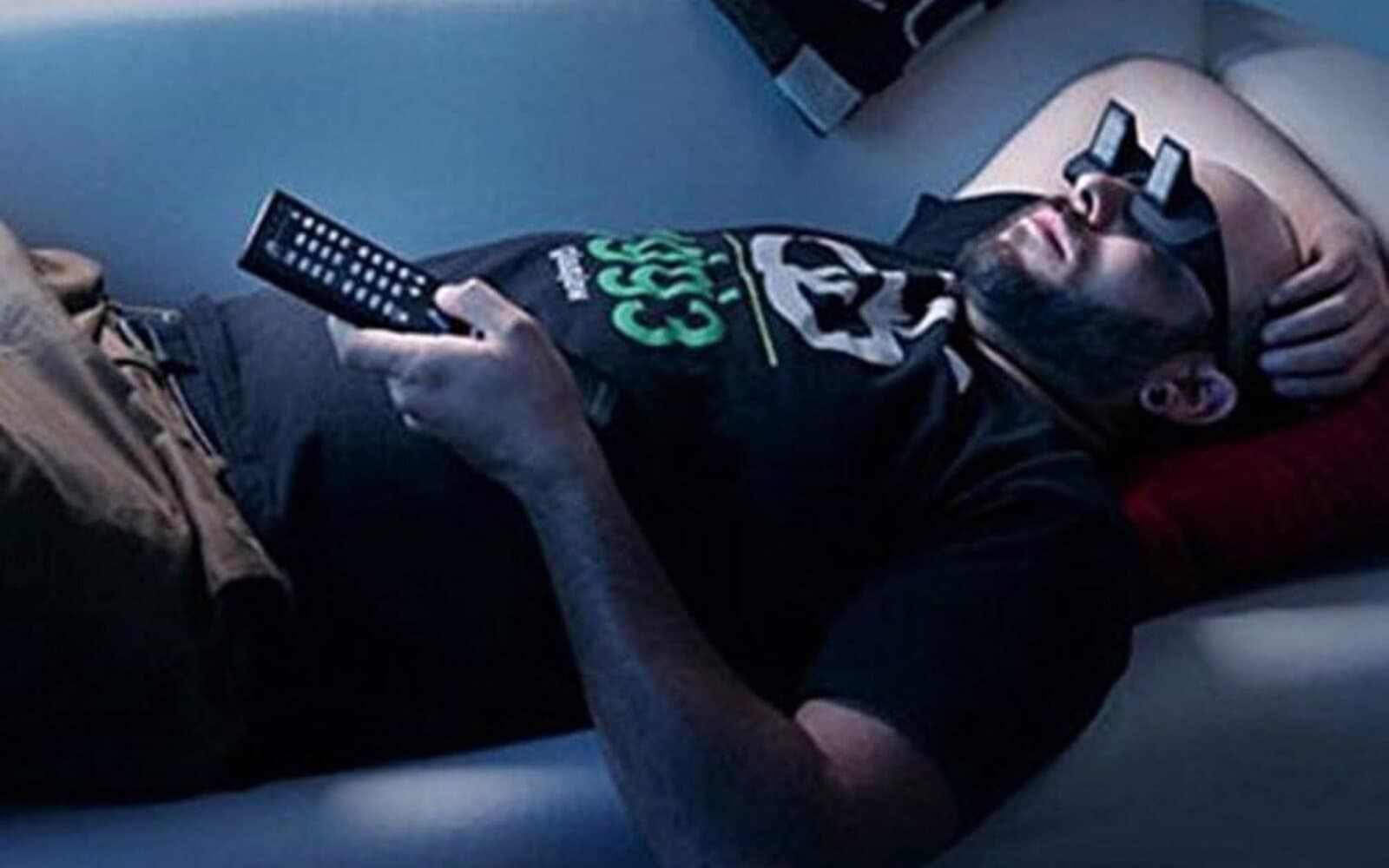
Lying down to watch a film is one of life's simple pleasures, until your neck starts complaining. The problem usually isn't you, it's the geometry: TVs are placed for people sitting upright, not people lying down.
The core problem
When you're lying on your back and the TV is in front of you, you have to tilt your head forward or prop it up to see the screen. On your side, you end up twisting your neck. Either way, your head is doing extra work to line up with the screen. The fix is to line up the screen with you, or to redirect your view.
Five ways to do it
- 1
Lower or tilt the TV
A wall mount with tilt or a low stand at the foot of the bed can bring the screen closer to where your eyes actually are when you're lying down.
- 2
Bring the screen to you
A tablet or laptop on a bed stand or floor-standing arm can sit right in front of you at a comfortable height.
- 3
Sort your pillows
Support your head and neck evenly, and avoid stacking pillows so high that your chin drops toward your chest.
- 4
Project onto a wall or ceiling
A small projector can put the picture wherever is most comfortable for you, though it needs a fairly dark room.
- 5
Redirect your view with prism glasses
Lazy glasses bend your line of sight so you can lie flat and look straight ahead at a TV or tablet placed in front of you. See how they work.
Setting up your room for prism glasses
- Put the screen in front of you. Place the TV straight ahead of your feet, not off to one side.
- Mind the height. Since the prisms shift your view forward, the screen works best at roughly the height of your eyes as you lie on your pillow. A low unit or a tilt mount at the foot of the bed usually works well.
- Choose a distance you like. Sit the TV where you'd normally be comfortable watching it.
- Dim the room and lower the brightness. A very bright screen in a dark room is tiring whatever glasses you wear.
- Keep the remote within reach. No shuffling around.
Curious how they compare with ordinary glasses? Read prism glasses vs. reading glasses.
Frequently asked questions
How far away should the TV be?
Wherever you'd normally sit comfortably to watch it. The prisms change the direction you're looking, not how far the screen is.
Do lazy glasses work with phones and tablets?
Yes. Hold the device upright in front of you, or use a stand, and it works the same as a TV.
Can I wear them for a whole movie?
Many people do. Take breaks, look away now and then, and remove them if you feel any discomfort.
Do I still need my regular glasses?
If you normally wear glasses to see a TV clearly, wear them underneath. Lazy glasses don't correct your vision.
Lie back. Look straight ahead.
Horizontal prism glasses that bend your view by about 90 degrees, so your head can stay right where it's comfortable.
- Read, scroll or watch TV lying flat on your back
- Non-magnifying, fits over your own glasses
- Free shipping and a 30-day guarantee

Keep reading
All guides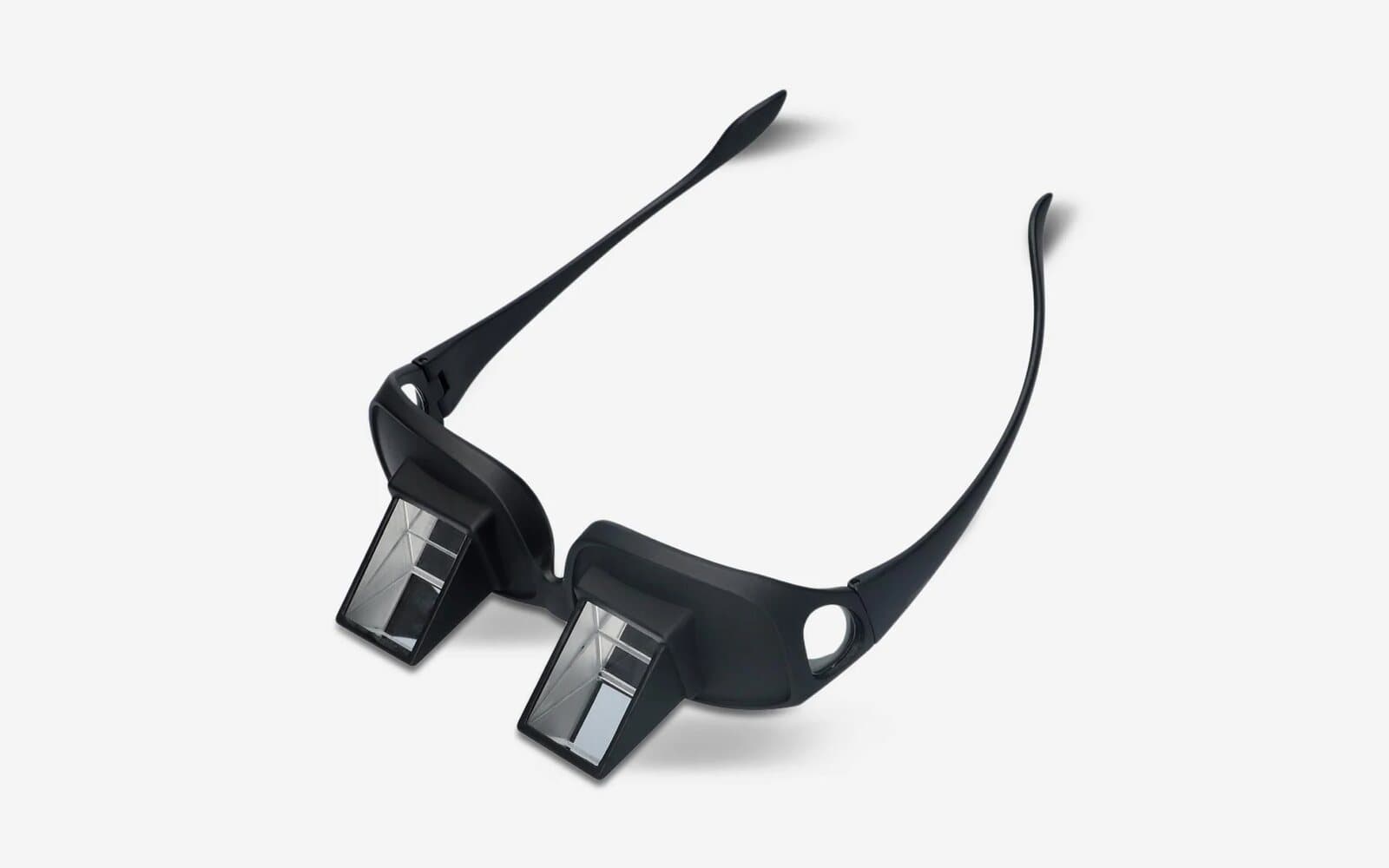
Do Lazy Glasses Actually Work? A Plain-English Explanation
Prism glasses look like a gag gift. Here's the simple optics behind them, what they do well, and where they fall short.
Read the guide
How to Read in Bed Without Neck Pain: 9 Setups That Help
Propping yourself up on three pillows is how most of us end up with a stiff neck. Try these instead.
Read the guide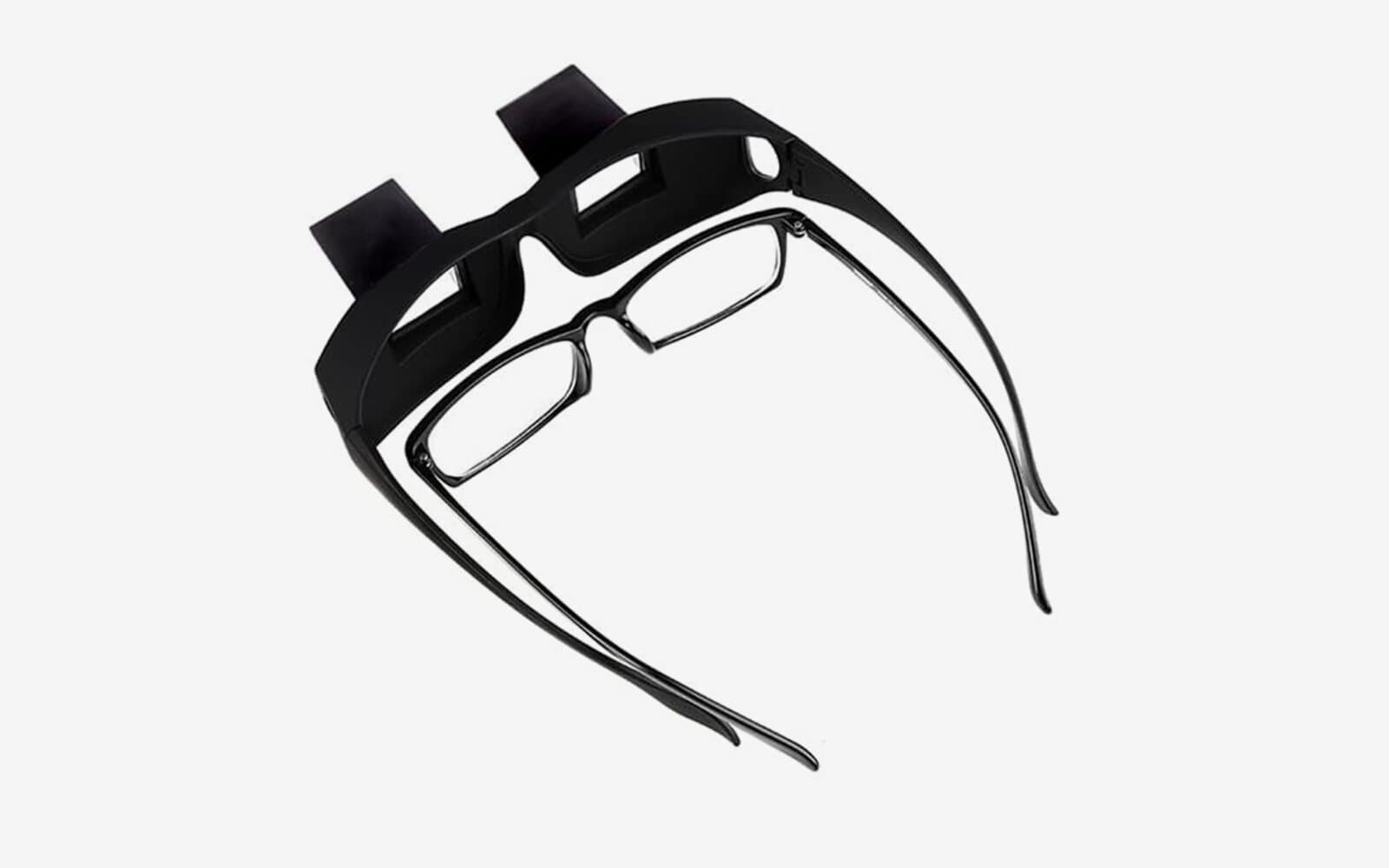
Can You Wear Lazy Glasses Over Prescription Glasses?
Short answer: yes. Here's how to make it comfortable, and what to expect with reading glasses, bifocals and contacts.
Read the guide